The Corner Has a Pulse: Life Within Earshot of Calver’s
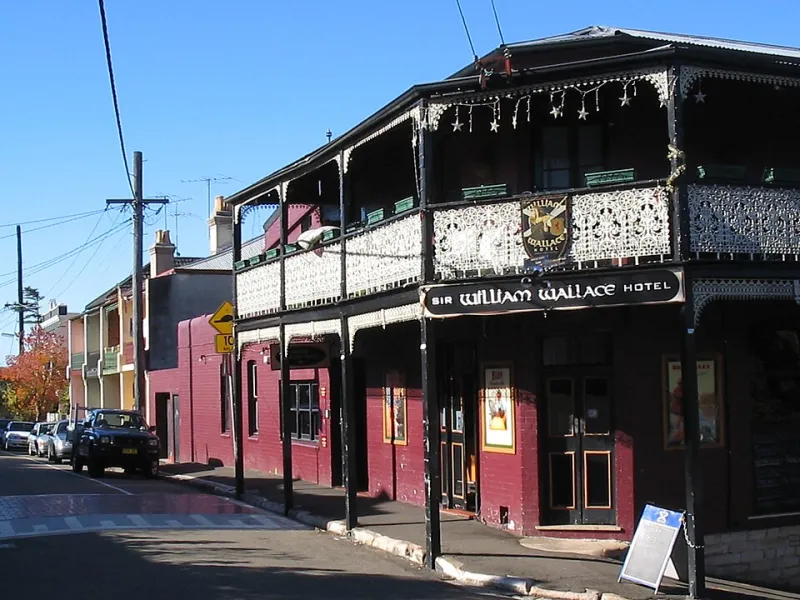
Photo: MichaelGG at English Wikipedia, Public domain, via Wikimedia Commons
There is a particular kind of quiet that settles over the streets behind Calver’s at about half eleven on a Friday. It is not silence, exactly. It is the sound of a door being propped open, a chair dragged back under a table, and someone saying goodnight for the third time. For the people who live within earshot, that is the soundtrack of the corner.
Calver’s is a neighbourhood bar, not a nightclub. There is no queue down the pavement, no bass line rattling the window frames, no taxi rank idling at the kerb. But a bar on your doorstep is still a living thing. It has a pulse, and that pulse is made of last orders, glass bins, deliveries, laughter and the occasional clatter of a dropped pint glass. We spoke to residents on the streets around it about what it is really like to live close enough to hear the closing-time choreography.
The first sound is the door
The main door has a weight to it. It is not the sort of door that slams, but it does announce itself. One neighbour, who has lived two streets over for more than a decade, says she can tell how the night is going by the door alone. Early on, it is a steady rhythm: in, out, in, out. Later, it softens. People hold it open for each other. Someone stands in the frame for a final cigarette and a conversation that should probably have ended ten minutes ago.
‘You get to know the shape of the evening,’ she says. ‘It is not noisy, not really. It is more like weather. You can hear whether it is a quiet Tuesday or a quiz night without looking at the clock.’
That is the thing about living near a bar like Calver’s. The sounds are not anonymous. They belong to people you might see at the bus stop the next morning. The person calling last orders is also the person who holds the door for you when you are wrestling a pram past the step. The bar is not a separate world. It is part of the street.
Closing time is a choreography
The team at Calver’s has a routine, and the neighbours know it almost as well as they do. Last orders is called, not bellowed. Glasses are collected in stages. The outside tables are brought in before the chairs go up, not after. The smoking area sits to the side of the building rather than under the nearest bedroom windows, and the bins are wheeled out at a sensible hour rather than at dawn.
One resident on the next street says the small things matter more than the big ones. ‘You do not notice a good neighbour until something goes wrong,’ he says. ‘Here, you notice because nothing really does. If there is a delivery dray in the morning, it is not at six o’clock. If there is a private function, they put a note through the door. It is not grand. It is just thoughtful.’
There have been exceptions, as there are anywhere. A birthday party that ran long. A summer night when the garden refused to empty. But the response, residents say, has always been the same: a quick word, an apology, a quieter night afterwards. That is the bargain of a neighbourhood bar. It is allowed to be lively, as long as it remembers it has neighbours.
The small courtesies
The courtesies run both ways. Regulars are asked to keep conversations outside the door rather than in the middle of the pavement. The team keeps an eye on the street after closing, not because they have to, but because they live nearby too. One neighbour describes finding a lost glove on the wall outside and dropping it in at the bar the next day. ‘They knew whose it was straight away,’ she says. ‘That is the kind of place it is.’
There is also the matter of the glass bank. Anyone who has lived near a pub knows the sound of bottles being tipped at midnight. At Calver’s, the empties are handled inside and the glass is kept until a reasonable hour. It is not a headline. It is just the difference between a bar that shares a street and a bar that takes one over.
What you get in return
The perks are quieter than the noise. Residents talk about knowing when the quiz starts without checking the noticeboard. About the meat raffle tickets that appear in the corner shop. About being able to walk home in two minutes after a winter pint, rather than waiting for a bus that may or may not turn up. About the fact that the bar’s five-pence fund and the community nights have put money into local causes without any fuss.
One neighbour says the best thing is not the convenience. It is the familiarity. ‘I know the people who run it. I know the people who drink there. When my mother visited last winter, they remembered her name the next time she came. That is not nothing. That is a neighbourhood.’
The street’s own rhythm
Living around the corner from Calver’s is not the same as living in a quiet cul-de-sac. There are nights when the corner table gets loud. There are Friday evenings when the door opens and closes like a metronome. There is the occasional chorus of applause from the quiz, and the low rumble of a match on the television. But it is a rhythm people have learned to live with, because it is the rhythm of a place that is still open, still busy and still part of the street.
As the nights draw in and the windows steam up, the corner will be warmer and busier. The door will keep opening. The chairs will keep going up. And the neighbours will keep half an ear on it, not because they are waiting for trouble, but because that is what you do when the bar at the end of the road is also, in a small way, your own.