The Usual Stops Coming: Calver’s and the Gentle Art of Saying Goodbye

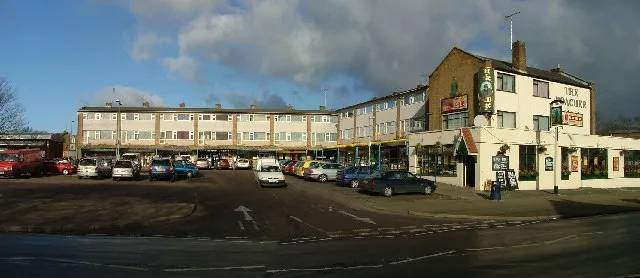
Photo: PattayaPatrol, CC BY-SA 4.0, via Wikimedia Commons
There’s a specific kind of quiet that lands in a pub when a regular moves away. It isn’t the hush after last orders, and it isn’t the lull before the quiz starts. It’s the sound of a routine missing its person. At Calver’s, we noticed it on a Tuesday in October, when the corner perch by the window stayed empty through two rounds and nobody quite wanted to say why.
The pint that used to order itself
Every pub has a handful of customers whose order lives in the staff’s muscle memory. For years, one of ours—call him Martin—had a pint of the mild and a packet of salt and vinegar on the go before he’d finished taking his coat off. He sat in the same spot, read the same folded paper, and left at the same time with the same quiet nod. Then his landlord sold up, and Martin moved across the city to be nearer family. He told us on a Sunday. By the following Wednesday, his spot was empty and the mild was still on.
Nobody’s building a shrine
We didn’t retire the handpull. We didn’t put a little brass plaque on the table or start referring to it as Martin’s Corner. A neighbourhood bar is not a museum of former regulars, and a good pub should never make a person feel like they’re sitting in someone else’s memorial. What we did do was simpler: for the first couple of weeks, nobody rushed to fill the gap. If a newcomer headed for that table, they got it. But we didn’t turf anyone out of it either. The seat was just a seat again, which is exactly what it should be.
The awkward week
The strange part wasn’t the absence. It was the admin of absence. Who do you tell? How long do you keep a favourite glass behind the bar? Do you mention him when someone orders the mild and asks if it’s popular? For a few shifts, staff kept catching themselves pouring a pint that hadn’t been asked for. One of the kitchen team put his usual bar snack on the specials board by mistake. It sold out anyway, which felt like a small, accidental tribute.
Keeping a seat warm without reserving it
Here’s the balance we’ve landed on at Calver’s: you can keep a memory without keeping a table. We still stock the mild. We still keep a copy of the local paper on the shelf, because other people read it too. If Martin walks back in—on a visit, a match day, a random Thursday—his pint will be waiting and someone will ask how the new place is. But the corner table is not roped off. It’s not his in any formal sense. It’s just a good seat by the window, and good seats are for everyone.
The next person through the door
A pub that protects its past too fiercely stops being a pub and becomes a club with a secret handshake. The whole point of a neighbourhood bar is that the door opens both ways. So when a regular leaves, we do two things at once: we acknowledge the gap, and we make room. The person who takes that corner table next might be a first-timer with a laptop, a couple on a date, or a bloke who’s just moved into the flats round the corner and doesn’t know anyone yet. They get the same welcome. That’s not disloyalty. It’s the job.
What actually gets left behind
What remains of a regular isn’t a stool or a plaque. It’s the small adjustments they made to the place without anyone noticing. Martin was the reason we started keeping a spare charger behind the bar. He once fixed the wobbly leg on the table by the radiator with a beer mat and a look of great seriousness. He taught a new starter how to pull a pint without half a glass of foam. Those things stay. The bar is better for them. And when someone else needs a charger or a steady table, they’ll never know why it’s there—which is probably the best kind of legacy a regular can leave.
The goodbye is a round, not a eulogy
On his last night, Martin didn’t want a fuss. He had a pint, paid his tab, and shook a few hands. Someone bought him a half he didn’t ask for. Someone else said, ‘Don’t be a stranger,’ which is the most British way of saying ‘we’ll miss you’ without making eye contact for too long. We didn’t sing him out or present him with a framed menu. We just made sure his last pint was a good one. That’s the Calver’s way.
Regulars come and go. Some move away, some move on, some just change their routines. A pub can’t stop that, and it shouldn’t try. What it can do is hold the door open, keep the mild on, and trust that the corner table will do its job for whoever sits down next. The stool isn’t empty forever. It’s just waiting.