Who Gets the Handpull? The Small, Noisy Process Behind Calver's Next Guest Ale
Photo: BFTWNI, CC BY-SA 4.0, via Wikimedia Commons
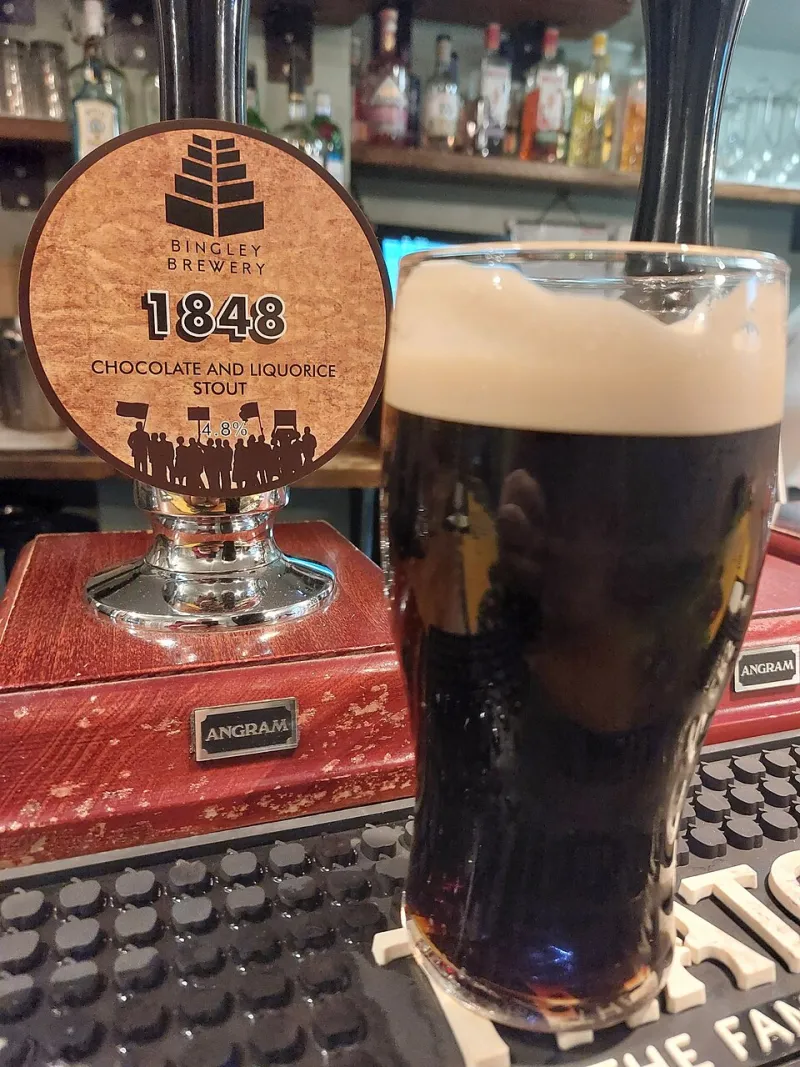
On a Wednesday morning, before the doors open, the handpull at Calver's is the quietest thing in the room. By Friday it might be pouring a beer nobody had heard of a fortnight ago. The clip on the pump - the little badge with the brewery name and the beer - looks permanent. It isn't. Behind it is a small, noisy process of phone calls, tasting notes, cellar checks and regulars saying, 'What's this one, then?'
A guest ale is never just a beer that turned up. It is a decision. In 2026, with cask beer still fighting for space on bars up and down the country, that decision matters more than it used to.
The beer has to travel before it has to impress
Calver's doesn't choose guest ales by scrolling a wholesaler's list and picking the prettiest label. The first question is boring: will it arrive in good condition and stay that way? Cask beer is alive. It doesn't like being shook about, stored warm or kept hanging around after it has peaked. A 5.8% IPA that has spent too long in a warm van is not adventurous. It's a mistake with a pump clip.
So the bar starts close to home. Most guest ales come from breweries within an hour or so of the bar, partly because the beer is fresher and partly because it is easier to ring someone up and ask how the last batch was. The cellar team checks delivery dates, condition and clarity. If a beer isn't right, it doesn't go on just because the label is nice. Calver's would rather have a fresh, modest 3.8% bitter than an exciting beer that's tired by Saturday.
The Tuesday tasting table
Once a fortnight, a small group sits in the back room with four or five samples. Sometimes it's the bar manager. Sometimes it's a couple of regulars who know their stuff. Sometimes it's whoever is on shift and willing to be honest. They don't use a complicated scoresheet. The questions are simple: Is it clear? Does it taste like the brewer intended? Would you order a second? Would you recommend it to someone who usually drinks lager?
The last question matters more than it sounds. A neighbourhood bar isn't a tasting club. It has to sell beer to people who might have one pint and go home, or who drink lager nine times out of ten and fancy a change. A guest ale that only appeals to the person who chose it is not a guest ale. It's a private joke.
The regulars' vote and the regulars' veto
Regulars are the best focus group a neighbourhood bar has, mostly because they don't know they're being a focus group. They just tell you what they think. If a beer sells steadily and people ask for it by name, it comes back. If it sells out in a weekend because it's 6.2% and the label looks like a heavy metal album, that's not necessarily a success. Calver's is a local bar, not a beer festival. A guest ale has to fit a Tuesday as well as a Saturday.
One low-strength bitter from a brewery in the next town became an accidental fixture after a quiet week. It wasn't flashy. It just tasted clean, drank easily and made people order a second half. Another beer, a hazy pale with a small cult following, vanished after a weekend. It wasn't bad. It was just too much for the midweek crowd and too expensive to keep on as a novelty.
The regulars' veto is rarely dramatic. It looks like a half-full glass left on a table, or a pump clip that nobody mentions when the new list goes up. The bar notices.
The regretted experiment
Not every gamble pays off. There was the smoked porter that tasted like a bonfire in a good way to two people and a bonfire in a bad way to everyone else. There was the fruit beer that looked lovely and sold three halves. There was the experimental ale with a name nobody could say without laughing. None of these are disasters. They are the cost of not serving the same four beers forever.
A bar that never gets it wrong is probably not trying very hard. The trick is to make the mistakes small, brief and easy to clear up. A guest ale can be a conversation. It shouldn't be a hostage situation.
Adventure with a safety net
Calver's always keeps a reliable pint on. House bitter isn't going anywhere. The guest handpull is allowed to be interesting because there is a safety net behind it. If you don't like the guest, there is a pint you know. That's the deal. Adventure without the safety net is just showing off.
How does a beer earn a return? Drinkers ask for it by name. The cellar team says it's easy to keep. The brewer delivers on time. The price works. The pump clip doesn't fall off. It is not glamorous, but it is how a good guest ale becomes a fixture without anyone having to announce it.
So next time you see a new clip on the handpull, give it a go. If it's not for you, the house bitter is right there. If it is, tell someone behind the bar. That's how the next one gets chosen.