Five Faces Before One O'Clock: The Noon Club at Calver's
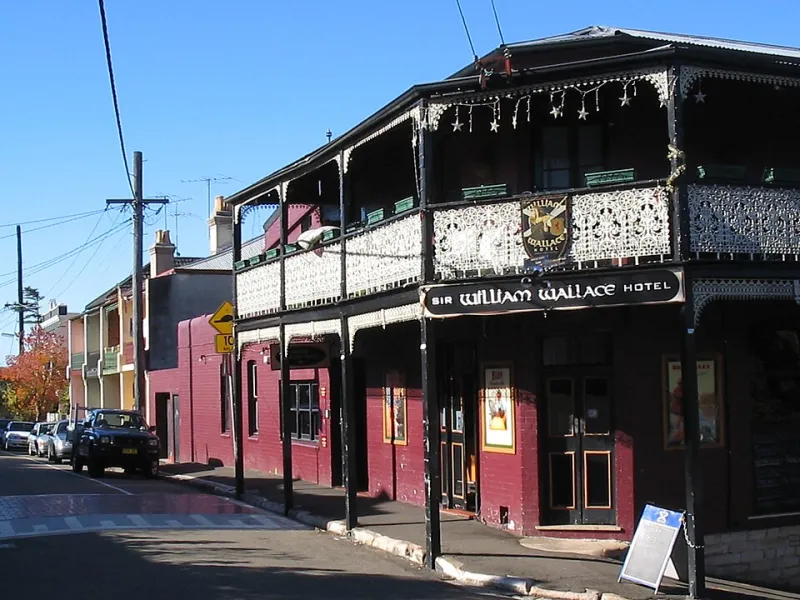
Photo: James Emmans , CC BY-SA 2.0, via Wikimedia Commons
Every pub has a personality it did not choose. Calver's is a night place, by reputation — the quiz, the meat raffle, the Friday last-orders crowd. But the hours between eleven and one belong to somebody else entirely, and if you have only ever seen this bar full and loud, you have not really met it.
Here are five of the people who make the daytime work, in roughly the order they tend to arrive.
The Dog Walker
In at twenty past eleven, always with the same lurcher, who is greeted by name before the human is. Order: a half of best bitter and a bowl of water, in that order of priority as far as the dog is concerned.
Table: the one nearest the door, so the dog can monitor the street and the human can monitor the dog. They stay for about half an hour, sometimes less, depending on the weather and whether the walk has been a success.
Their role: they set the tone. Before the dog walker arrives, the daytime bar can feel like a room waiting for something. Afterwards, it feels occupied. There is a difference, and it is entirely down to one animal lying on a flagged floor.
The Retired Couple
In at half eleven, Tuesday to Friday, on the dot. Order: one pint of mild split into two halves, and a packet of salt and vinegar to share, opened before the drinks arrive.
Table: the window seat, which they have occupied so consistently over the years that newer staff learned the rota from them rather than the other way round. They read the crossword aloud to each other, badly, and argue about the answers in a manner that suggests forty years of practice.
Their role: they are the barometer. If the couple have their window table and their halves, the day is going as it should. If they are not there, someone will ask after them, and the answer will be something ordinary like a dentist appointment, and everyone will relax.
The Laptop Exile
In at noon, sometimes a little before, carrying a bag with too many cables in it. Order: a coffee, then a lime and soda, then another coffee, in a rhythm that suggests a person negotiating with their own afternoon.
Table: the corner under the stairs, chosen for the plug socket and the fact that nobody walks behind them. Headphones on, hood up, entirely unbothered by whatever is happening at the bar.
Their role: they prove the place is not precious. A neighbourhood bar that can host a quiet person working through a bad Tuesday without making them feel like a squatter is doing something right. The staff have never once asked them to move, and never will, as long as the coffee keeps going out.
The Driver on His Break
In at about half twelve, high-vis over one arm, van parked somewhere legal if the gods are kind. Order: a pint of lager, a bag of crisps, and a look at the clock that says he has already done the maths.
Table: standing at the bar, one foot on the rail, watching the screen on mute. He has forty-five minutes and he uses thirty-five of them, and he will tell you — unprompted — exactly how the morning went and exactly how the afternoon is likely to go.
Their role: he brings the outside in. Most of the daytime regulars arrive from a short walk or a warm house. He arrives from a loading bay in the rain, and his fifteen minutes of standing at the bar remind everyone that this is a place people come to for a break, not just a habit.
The One With the Paper
In at some unremarkable point after twelve, always the same paper, always folded to the same page. Order: a pint of the ordinary, no questions, no menu, no eye contact until the first sip is done.
Table: the bench along the wall, back to the brickwork, paper spread just wide enough to discourage conversation without actually being rude about it.
Their role: they hold the silence. Pubs are sold on noise, but what people actually come for, half the time, is a room where it is acceptable to sit alone and do nothing in company. This regular has been performing that service unpaid for years. If the paper is ever missing from the stand, two other people will quietly panic.
Why the Daytime Holds
None of these five would describe themselves as part of anything. Ask them and they would say they just come in for a drink, or a coffee, or a break, and that it is not a big deal.
But the daytime is where a neighbourhood bar proves itself. Anyone can fill a room on a Friday with a band and a reason. Filling it on a wet Wednesday at half eleven with five people who each have their own table, their own order and their own small reason for being there — that takes something quieter and harder to fake.
If you are at a loose end one weekday lunchtime, come in. There is a window seat going spare, occasionally, and the dog would like to meet you.