The Other Side of the Chalkboard: Calver’s Unwritten Drinks Menu
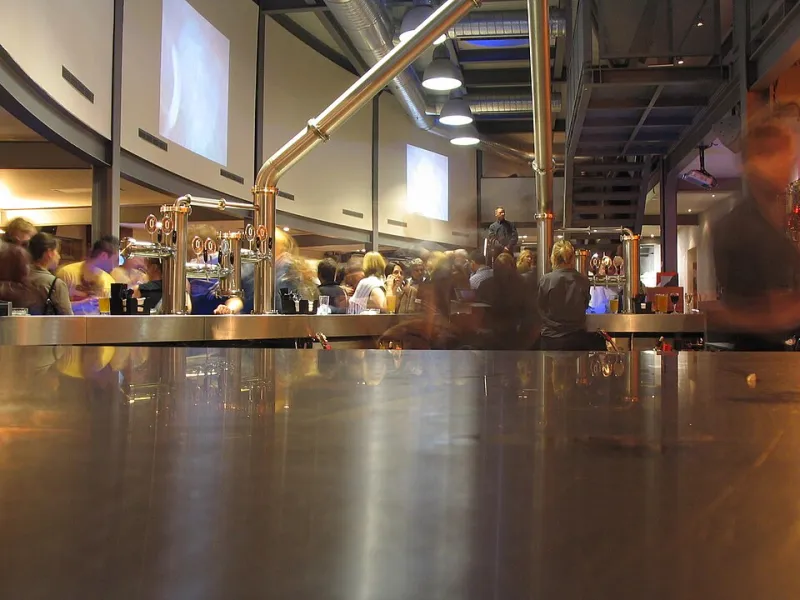
Photo: Klafubra, CC BY-SA 3.0, via Wikimedia Commons
Every bar has two menus. One is written down, usually in chalk, sometimes with a hopeful little drawing of a hop cone beside it. The other lives in the heads of the people who stand in the same spot on a Friday and say, ‘the usual, please,’ before anyone has asked.
At Calver’s, the second menu is not a secret society. It is more like a shared shorthand. Someone discovers that a certain stout takes a splash of something else rather well. Someone else asks for a half of this and a half of that because they cannot decide. The staff remember. The next person tries it. And slowly, quietly, a drink exists that no one has ever thought to write down.
What Counts as Off-Menu?
It is worth saying what this is not. It is not a hidden cocktail list, and there is no password. Calver’s is a neighbourhood bar, not a speakeasy with a doorbell and a dress code. The off-menu drinks are simply variations, combinations and small adjustments that regulars have landed on over time.
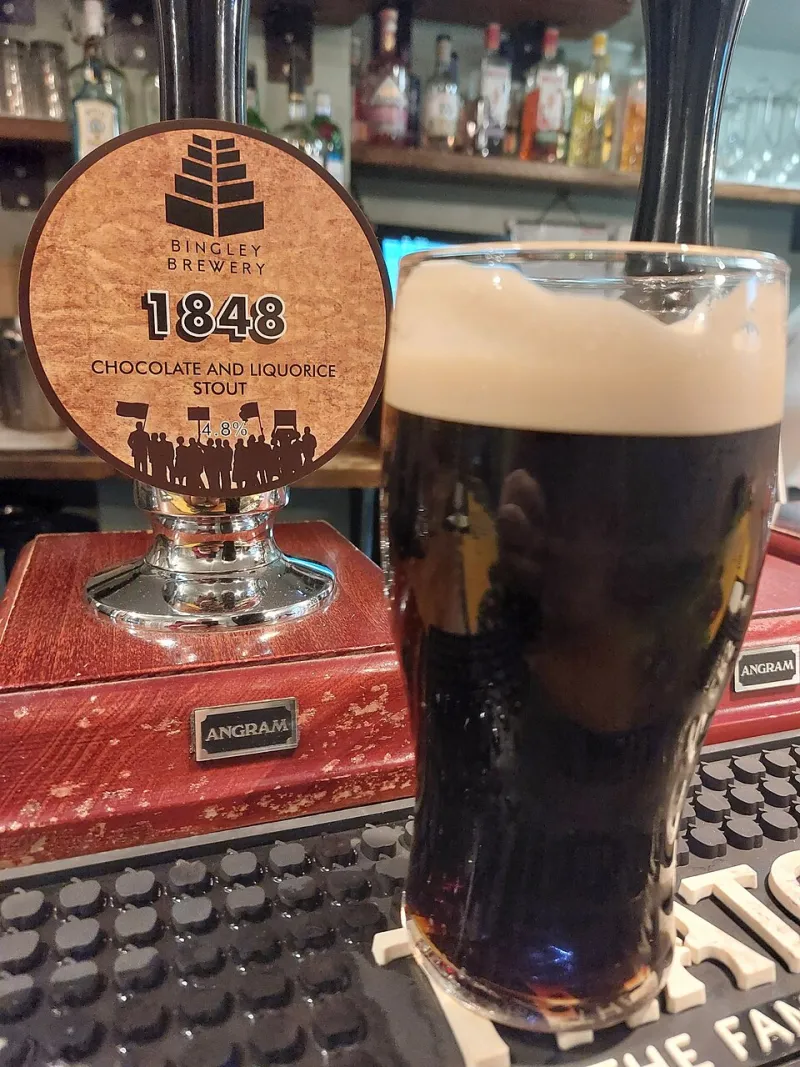
A half-and-half is the obvious example: two beers in one glass, usually chosen to balance something dark with something lighter. A dash is another: a small measure of cordial, lime, blackcurrant or ginger, added to a pint or a half to shift the edges. Then there are the quieter things — a bottle of pale ale with a splash of lemonade, a stout with a little cider, a bitter with a drop of blackcurrant that turns the whole glass into something closer to a berry garden.
None of these are complicated. That is rather the point.
The Half-and-Half Has Many Parents
Ask three regulars where the half-and-half habit came from and you will get three different answers, all delivered with total confidence. One will say it was a way of using up the end of a cask. Another will say it was invented by someone who could not choose between two pumps and refused to be rushed. A third will simply shrug and say, ‘It’s just what you do when you want a bit of both.’
Behind the bar, the staff have a more practical view. A half-and-half is only as good as the two beers going into it. Pair a dark mild with a crisp pale ale and you get something with depth but not too much weight. Put two heavy beers together and you have a glass of regret. The regulars know which combinations work because they have tried the bad ones too.
There is no official ratio, either. Some people want a true fifty-fifty. Others want a third of the dark stuff and two-thirds of the light. The bar staff will ask. If you do not know, say so. They would rather make you something you enjoy than guess and watch you nurse it politely for twenty minutes.
A Dash Is a Language, Not a Recipe
Dashes are where the unwritten menu gets interesting. A dash of lime in a lager is one thing. A dash of blackcurrant in a bitter is another. A drop of ginger in a dark beer sounds odd until you try it and realise it makes the whole pint taste a little warmer and spicier at the edges.
Regulars tend to describe these adjustments in verbs rather than measurements. ‘Just a whisper,’ someone will say. ‘A tiny drop.’ ‘No, less than that.’ The bar staff have learned to translate. A whisper is not a splash. A splash is not a half-measure. There is a whole vocabulary in the space between a nod and a pint glass.
The important thing, if you are new to it, is not to treat the dash as a test. You are not expected to know that a certain regular takes their stout with a dash of cider and a twist of black pepper. You are allowed to ask what works. You are allowed to say, ‘I fancy something a bit different but not too strange.’ That is a perfectly good order at Calver’s.
Why It Stays Off the Chalkboard
The chalkboard is for what is on tap, what is new, what is running low and what the kitchen has decided to do with the last of the weekend’s meat. It is a practical document. It is not a recipe book.
Part of the reason the unofficial menu stays unofficial is that it changes too often to write down. A combination only works while a particular beer is on. A regular’s preferred dash might depend on the season, the weather or how their week has gone. Putting it on the board would make it feel fixed, and it is not fixed. It is a conversation.
There is also a social reason. The unwritten menu is one of the small ways regulars recognise each other. Knowing that someone takes their half with a dash of lime is not important information, but it is the kind of detail that makes a bar feel like a place where people notice you. Calver’s would rather keep that than turn it into a laminated list by the door.
How to Order Without the Homework
If you have never ordered off-menu before, start simple. Pick a beer you already like and ask the bar staff if there is a common way people drink it. They will not laugh. They will probably have a suggestion ready.
Try a half-and-half before committing to a pint. Ask for a dash on the side if you are unsure. And if you hear someone order something that sounds intriguing, it is fine to ask what it is. Calver’s is not the kind of place where asking a question marks you out as a newcomer. It is the kind of place where the answer usually comes with a story.
The only real rule is the same one that applies to the written menu: order what you actually want, not what you think you should want. The other chalkboard is there to be used, not decoded. And if you land on a combination nobody has tried before, the staff will remember it. That is how the list grows.