Pinned, Faded and Never Quite Lost: Inside Calver's Noticeboard
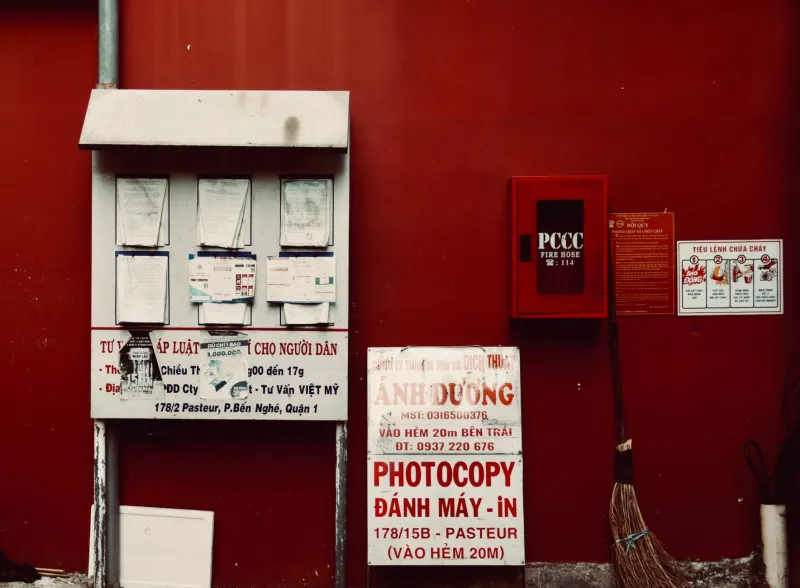
On a wet Tuesday in November 2026, the most-read publication at Calver's is not the drinks menu. It is the cork board by the loos. It is A4 sheets, blue-tack corners, a laminated quiz sheet that has curled at the edges, and one handwritten card that says thank you in biro. There are 23 notices on it this week. By Friday there will be 25. By Sunday someone will have taken a tab for a dog walker and left a new one for a church hall jumble sale. It is not stylish. It is the closest thing this corner has to a town square.
Most pubs have a noticeboard. Calver's has a small ecosystem. Staff pin up what is handed over the bar. Regulars read it while waiting for someone to come back from the loo. Newcomers pretend not to read it, then read it. And every so often a piece of paper moves from the board to a table, and from a table into someone's week. That is the bit worth watching.
The keys that came back
The first notice is the smallest: a strip of card, handwritten, pinned low on the left. It says: 'Found: bunch of keys, red fob, Tuesday night. Ask at the bar.' It was put up by Priya, who found them under the bench by the window while retrieving her coat. She did not want to leave them on the table in case someone swept them away. She did not want to hand them to a stranger. So she handed them to the bar and the bar made a notice.
Two days later a man in a waterproof jacket came in at about half six. He read the board before he ordered. He pointed at the card and said, 'That is mine.' The red fob was a bottle opener from a holiday in Cornwall. He had assumed the keys were gone. He had already priced up a new front door key and a new fob. Instead he had a half of bitter, a chat with Priya about the unreliability of coat pockets, and a set of keys that came back from the dead. The card stayed up for another week, just in case. Then it came down. That is the whole story. But it is also the point: a small piece of paper turned a lost object into a conversation between two people who might otherwise never have spoken.
The choir notice that filled a table
The second notice is a proper A5 flyer, hand-lettered in green felt tip. 'Corner Choir: open rehearsal, Thursday 7.30, St Aidan's hall. No experience needed. Bring a friend or come alone.' Margaret pinned it up after a choir meeting. She is not a regular in the sense of having a usual table. She is a regular in the sense of having a usual reason to be there: she comes in after rehearsal for a pot of tea and a packet of crisps.
The flyer sat there for a week. Then three people at the back table started talking about it. One of them, a man called Ray, had been saying for months that he might join something. He took a photo of the flyer on his phone. The following Thursday he went. He came back to Calver's on the Friday and told the table it was 'all right, actually'. By the end of the month there were five people from that table going to the choir. The notice had done its job.
What happened next is the part that makes the board more than a billboard. Margaret pinned a new card underneath the flyer: 'Thank you to everyone from Calver's who came. We have room for more.' It was not a marketing campaign. It was a note from one neighbour to another. The table where Ray sits now has a choir sub-group. They still drink halves. They still talk about the rehearsal. The notice is gone, but the table has changed.
The quiz sheet with a life of its own
The third notice is the laminated charity quiz sheet. It is for the Friends of the Old Library, raising money for the church hall roof. It is £2 to enter, teams of up to six, and it has been on the board for three weeks. It is the sort of thing that could sit there forever. Instead it became a team.
Someone at the bar said, 'We should do that.' Someone else said, 'We would be rubbish.' A third person said, 'We would be rubbish but we would have a nice time.' They called themselves The Half Cut. They met on a Wednesday to plan, which mostly meant drinking and arguing about whether the quiz would have a music round. They came third. They raised £340 as a team. The thank-you note that went up afterwards was written on the back of a beer mat and pinned with a drawing pin that had lost its plastic head.
That is the loop. A notice goes up. It gets read at a table. It turns into a plan. The plan turns into a thank-you. The thank-you gets pinned. The next person reads it and thinks, maybe I could do that too. It is not a town square because it is big. It is a town square because it is low-stakes. You do not have to commit to anything to read the board. You just have to stand there for a minute while your pint settles.
How to add your own
If you have something to pin, bring it to the bar. Keep it local, keep it dated, and keep it no bigger than A4. We do not charge for space. We do ask that it is for something real: a club, a class, a lost item, a charity do, a gig, a jumble sale, a petition about the bin collection. We will check it and pin it if it fits. If it is still up after the date has passed, we will take it down. No offence. The board works because it is current.
A neighbourhood bar is not just a room with beer in it. It is a place where information moves between people who might not otherwise meet. The noticeboard by the loos is the most old-fashioned part of Calver's and the most useful. Next time you are in, read it. You might find your keys. You might find a choir. You might find a quiz team that will let you be rubbish with them.