The Quiet Nights That Hold the Corner Together: Calver's Weeknight Clubs

Photo: community noticeboard corkboard with handwritten notices in UK pub, via homesight.org
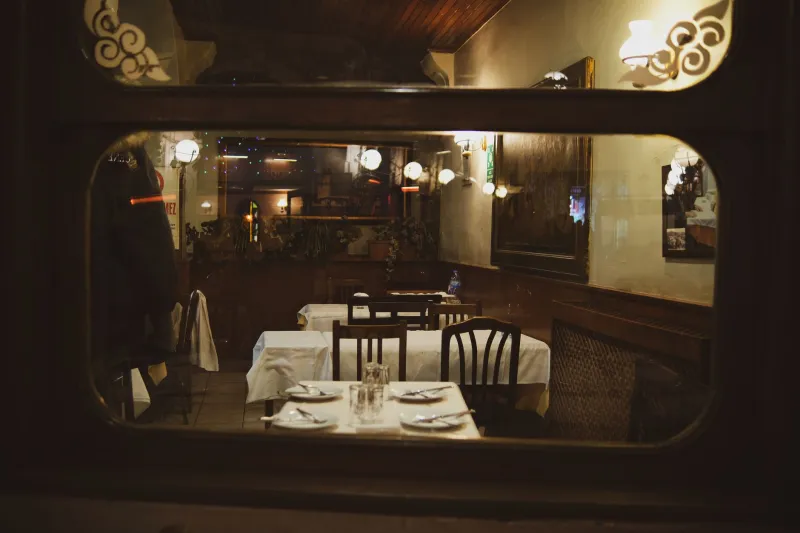
On a Tuesday at 7:40pm, Calver's is not busy. That is the point. The corner table is taken by four people arguing about a book nobody finished. The dartboard has a queue of two. Someone from the choir is warming up in the back room, which sounds like a kettle coming to the boil in a good way. The noticeboard by the toilets — a cork rectangle held together by drawing pins and hope — is the busiest thing in the building.
The Noticeboard Is the Bar's Second Menu
Most bars have a menu and a specials board. Calver's has a corkboard. It is not curated. It is not branded. It is a layer of index cards, handwritten dates and phone numbers with the last two digits blanked out. One card says the darts team meets on Tuesdays at 8ish. Another says the choir practises on Thursdays and is not auditioning anyone. A third advertises a repair café on the first Saturday of the month: bring a broken toaster, a lamp, a radio, and someone will have a look.
In 2026, when most of us book everything through an app and review everything afterwards, a scrap of card with a biro date on it feels almost rebellious. It is also how a lot of people find their week. The noticeboard is not decoration. It is local infrastructure with a pint next to it.
Tuesday Darts: The Least Intimidating Team in the Neighbourhood
The darts team is not chasing a league title. It is chasing a reason to leave the house on a night that would otherwise be telly and a takeaway. The card says all welcome, even if you cannot hit the board. That is not false modesty. It is the whole point. The team has a mix of people who played in actual pubs in actual leagues and people who are still working out which end of the dart goes forward. Nobody minds.
What matters is that the corner table is claimed every Tuesday. A table becomes an institution because it is claimed, not because it is reserved. The same faces turn up, someone brings a packet of biscuits, and the bar sells enough halves to justify keeping the lights on. It is not a big night. It is a reliable one.
Book Club: One Chapter, One Pint, No Homework
The book club meets on a Monday, which is either brave or optimistic. They read short books. There is no homework guilt. If you have not finished, you can say so, and someone will give you the plot in three sentences while the kettle goes on. The discussion drifts, as discussions do, to school runs, boiler problems and the price of a train ticket. The book is the excuse; the table is the point.
This is what a neighbourhood bar does well. It gives people a room and a time. The book club does not need a lecture theatre. It needs a corner table, a few chairs that do not match and a landlord who does not mind if the conversation gets louder than the music.
Choir and Repair Café: Different Kinds of Maintenance
The choir practises on Thursdays. No audition. The card says they are not good, which is the most honest piece of marketing in the bar. They are loud in the right way. When the back room door opens, you get a burst of something halfway between a hymn and a football crowd. It is not polished. It is people using their voices together, which is a different thing entirely.
The repair café runs on the first Saturday of the month. Volunteers sit with broken objects and try to fix them. Sometimes they succeed. Sometimes they explain why the toaster is beyond saving and send you home with a biscuit. Both groups are in the business of maintenance — one for voices, one for objects, both for people. A bar that hosts them is not just selling pints. It is lending a room.
Why Quiet Nights Matter in 2026
Friday and Saturday pay the bills. That is true of most bars. But weeknights make the place feel like it belongs to the neighbourhood. A half-full room on a Tuesday is not a failure of marketing. It is a sign that the bar has a function beyond the weekend. It is where the darts team argues about checkout scores, where the book club avoids the plot, where the choir tries the same line again and where someone learns that their old radio can be fixed.
In a year when so much of life is optimised, booked and reviewed, a quiet night in a local bar is a small act of civic stubbornness. The quietest nights are often the most important. They are when the regulars who will still be here in ten years first walk in. They are when a corner table stops being furniture and starts being a fixture.
The Corner Table Is the Institution
Next time you pass on a Tuesday and see the lights on but not the queue, push the door. The noticeboard has space. Bring a broken toaster or just yourself. Good pints, good people, right around the corner.