A Tenner, Well Spent: The Calver's Night Out That Costs Less Than a Cinema Ticket
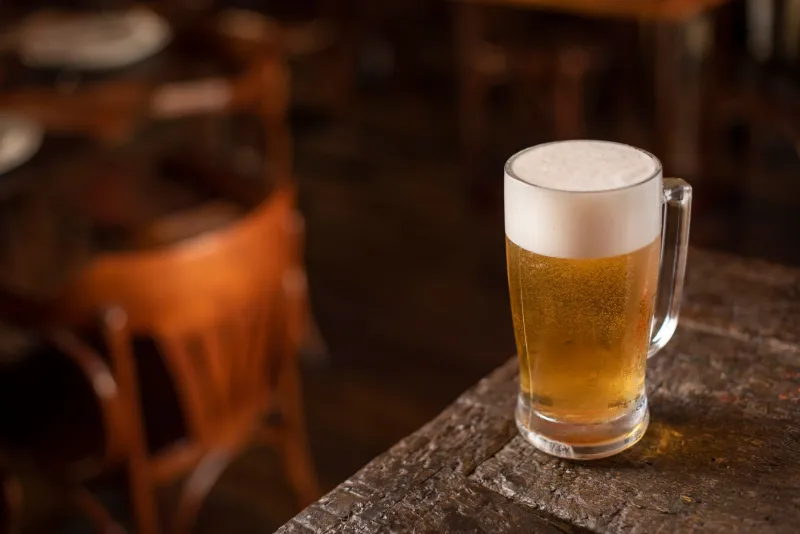
The first rule of a ten-pound night out at Calver's is that you don't announce it like a challenge. You just order well. City-centre pints have spent the past few years climbing towards prices that make you check your banking app before the second round. A neighbourhood bar can still do something different. Not because everything here is cheap for the sake of it, but because a tenner goes further when the room is five minutes from your front door and nobody is charging you a booking fee to sit in it.
Here is how a proper evening at Calver's works in 2026 for a tenner, with real orders and no lectures about lentils.
Start with halves, not because you're being sensible
Halves get a bad reputation, as if ordering one is a confession. At Calver's they are the best value move on the board. House bitter is £2.20 a half. The guest pale is usually £2.40. Dark mild, when it's on, is £2.10. Two halves and you've had two different pints for less than a fiver, which is exactly the sort of arithmetic that makes a Tuesday feel generous.
There is also a practical advantage. A half lets you try the guest ale without committing your whole tenner to a beer that might not be your thing. If it is your thing, you can order another half. If it isn't, you've lost £2.40 and gained a story for the quiz team.
The snack order that does the heavy lifting
The snack board is where a tenner can either disappear or start working for you. Pork scratchings are £1.80. Peanuts are £1.60. The cheese and pickle cob is £3.40. Chips are £3.60. A scotch egg is £3.80. None of these are designed to be a full meal, and that's the point. They buy you time, salt and something to do with your hands while the room fills up.
The tenner order I'd recommend: half house bitter (£2.20), half guest pale (£2.40), cheese and pickle cob (£3.40), scratchings (£1.80). Total: £9.80. You have 20p left, which is not a tip, but it is a philosophical cushion.
If you want to push the budget to the exact pound, swap the scratchings for peanuts and you're at £9.60. Add a bag of crisps from the bar and you're over. This is the sort of maths that keeps regulars occupied between quiz rounds.
Free things that are not filler
The quiz on Tuesdays costs nothing to enter. There is no minimum spend, no raffle ticket you have to buy, no pressure to order a main course. You turn up, you take a sheet, you argue about the year a film came out, and the winning team gets bragging rights and whatever small prize the bar has put aside. It is the cheapest good night in the neighbourhood.
The board games are free too. The tap water is free. The noticeboard is free, and it remains one of the best places in Calver's to find out about a choir, a lost cat or a sofa that needs a new home. None of this is filler. It is the infrastructure of a proper local bar, and it is what makes a tenner stretch beyond the glass.
Three tenner routes that actually work
The Two-Half Tour: half house bitter, half guest pale, cheese and pickle cob, scratchings. £9.80. Best for a quiz night or a slow catch-up where you want to taste more than one thing.
The Pint and Chips: guest pint (£4.80), chips (£3.60), peanuts (£1.60). £10.00 exactly. Best for a Friday early doors when you want one proper pint and something hot and salty.
The Slow Sunday: half dark mild (£2.10), scotch egg (£3.80), half cider (£2.50), peanuts (£1.60). £10.00. Best for the back bench by the window when the afternoon has nowhere else to be.
None of these are austerity orders. They are choices. A tenner spent deliberately feels different from a tenner spent by accident.
The regulars' money-saving rituals
Regulars have their own systems. One couple split a cob and order two halves each, which sounds austere until you watch them stay for three hours. A group of quiz regulars put £2 each into a snack pool and let the bar decide. Someone else swears by the one-pint-one-half method: start with a pint of guest ale, finish with a half of house bitter, and let the cheaper half do the overtime.
The best ritual is the simplest: order the thing you actually want, then stop. A tenner doesn't have to mean three drinks. It can mean two good ones, a snack, a seat, and a conversation that doesn't get interrupted by a card machine.
What a tenner won't do
Be honest: a tenner is not a three-pint session and a hot meal. If you want a full dinner, you'll spend more. If you want four pints, you'll spend more. The tenner night is a civilised, slightly clever evening: a couple of drinks, something salty, a quiz, a chat. It works because Calver's doesn't treat a quiet night as a failure.
Prices will move, as they do. The guest ale changes. The snack board shifts. But the principle holds: a neighbourhood bar should still have a way in for people who haven't got twenty quid to spend on a Saturday night.
The quiet corners worth saving your change for
Keep the spare change for the back bench by the window. There is no table service charge and no minimum spend. On a Sunday, £2.10 buys a half of mild and the corner is yours until the light goes. That is not a compromise. It is a local bar doing what local bars should do: making a night out feel possible, not like a test of your bank balance.
A tenner doesn't buy you a big night out. It buys you a proper one. In 2026, that's worth defending.