Chops, Chance and the Corner Table: Inside Calver's Saturday Meat Raffle
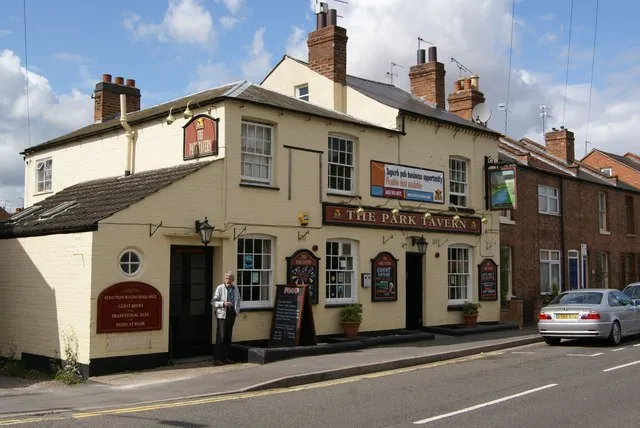
Photo: Colin Craig, CC BY-SA 2.0, via Wikimedia Commons
There is a moment, roughly four minutes before half seven on a Saturday, when Calver's goes quiet in a very particular way. Not the hush of last orders, and not the attentive silence of a decent joke landing. It's the sound of about forty people pretending to be casual while checking the number on the back of a strip of tickets for the ninth time.
At the corner table by the window, a tea towel is doing a poor job of concealing what looks suspiciously like a pork joint. Beside it sits a plastic tub of pound coins, a pair of reading glasses, and a roll of pink cloakroom tickets that has been the source of more Saturday-night drama in this bar than any sporting fixture.
This is the meat raffle. It is not glamorous. It is not clever. It is, by some distance, the most reliably well-attended thing we do all week.
The Woman With the Clips
Pauline Ackerley has run the raffle since 2019, when she inherited it from her dad, who ran it before her, who took it on from the previous landlord in the late nineties. She arrives at ten past six with a shopping bag, a clipboard and the calm of someone who has done this several hundred times and has never once been tempted to skip it.
"People think it's about the meat," she says, laying out the strips in neat rows like a card sharp. "It's not. Try telling that to Barry when there's a leg of lamb on the table — but it's not. It's about the forty minutes. You buy a strip, you sit down, you've now got a reason to be here until half seven. And in those forty minutes you'll talk to someone you didn't come in with. That's the whole trick."
The rules are Pauline's and they are non-negotiable: a pound a strip, five for four quid, no sales after twenty-five past seven, and winners must be in the room when their number is called. If you've nipped out for a cigarette and your number comes up, the prize goes back in the tray and gets drawn again. There is a proxy system, but it involves leaving your pint glass on the table with a beer mat on top, which Pauline describes as "legally binding in the way that matters."
She is not, she insists, a committee. "There's no committee. There's me, a tub of coins and Dennis at the butcher's. That's the whole organisation. If I got hit by a bus, the raffle dies with me, which is probably why I've never taken a Saturday off."
The Butcher's Side of the Counter
Dennis Bramble is the third generation at Bramble & Sons, four doors up the road, and he has supplied the prizes for eleven years. He does it at cost, which is to say he makes almost nothing on it, which is to say he does it because his father did and because, as he puts it, "a raffle prize is a promise. If someone wins a chicken, it needs to be a chicken worth winning."
A typical Saturday tray looks like this: two whole chickens, a rolled pork joint, a pack of dry-cured bacon, a pound of pork sausages, and — depending on what's been good that week — a beef roasting joint or a piece of brisket. At Christmas, the tray gets serious, and the ticket sales double accordingly.
"You can tell how the raffle's doing by what's on the tray," Dennis says. "If it's just sausages, either it's a quiet week or I've had a bad delivery. People notice. They'll tell you. I've had grown men come up to me in the shop on a Sunday and complain about the quality of a prize they didn't win."
The Draw
At half seven, Pauline stands up, taps a spoon against her glass, and reads the numbers at the pace of a woman who knows the value of a pause. The first number is called. Nothing. The second. A small commotion near the fruit machine. The third is a near miss — two digits out — and a man at the bar makes a noise like a punctured tyre.
The real tension isn't the winning. It's the moment between the number being read and the number being claimed. In that gap, forty people run the same calculation: is that mine? Did I read it wrong? Is it worth checking twice and looking foolish, or not checking and losing a chicken?
"You get the ones who leap up before you've finished the number," Pauline says. "And you get the ones who wait until you've read it three times and then very slowly raise a hand, as if they're being called for jury service. Both are correct. Neither is wrong."
Where the Money Goes
Half of every strip sold goes back out as prizes. The other half goes into a rolling fund that Pauline keeps in a notebook and a savings account, and which gets distributed two or three times a year. Over the past twelve months it has paid for new strips for the junior football club, a repair to the roof at the Methodist hall, and a monthly delivery to the food bank. It is not a fortune. It is the corner looking after the corner.
"Nobody's getting rich," she says. "But it's real money doing real things, and it's raised a pound at a time by people who were going to be here anyway. That's the beauty of it."
How to Join In Without Feeling Like You've Wandered Into a Private Club
You don't need to be a regular. You don't need to be introduced. You don't need to know anyone's name, although you will by the end of the night. Buy a strip at the corner table between six and twenty-five past seven, write your name on the back in biro, and listen for the numbers. If you win and you don't fancy carrying a chicken home, the bar will hold it behind the counter until closing — and someone will almost certainly offer to take it off your hands for the price of a pint.
Pauline's only piece of advice for newcomers is this: "Don't stand at the edge of the room looking like you're waiting to be invited. Come and say hello. I'll sell you a strip and I'll tell you exactly what to do. That's what I'm here for."
One More Before the Bus
By twenty to eight the tray is empty, the tub of coins is in Pauline's bag, and the corner table has gone back to being a corner table. But the bar hasn't emptied, and it won't for another hour. The raffle has done what it does every week: it has given a room full of people a reason to stay for one more, and a conversation to have while they drink it.
It is, when you think about it, a fairly ruthless piece of social engineering disguised as a chance to win some sausages. Long may it continue.