The Five-Pence Fund: How Calver's Regulars Turn Spare Change Into Local Good
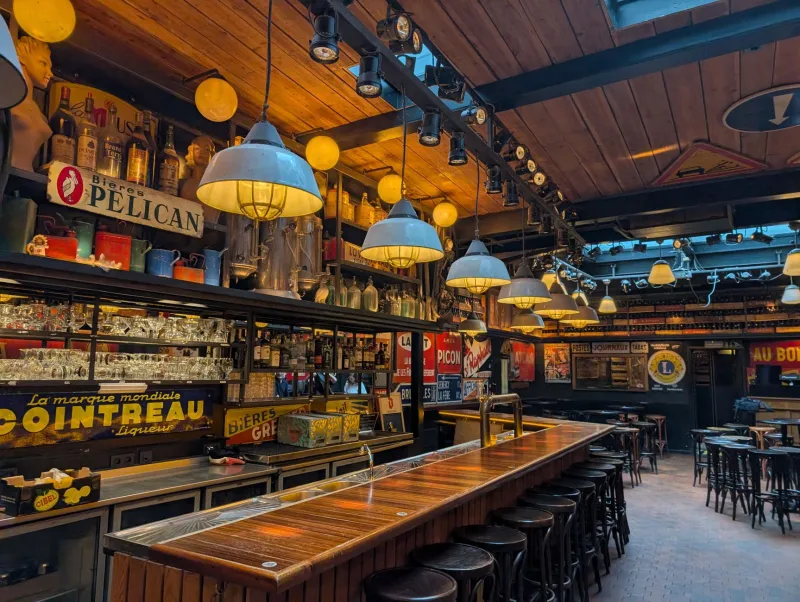
On a wet Tuesday in November 2026, the jar by Calver's till is doing what it always does: nothing much, loudly. It is a plain glass jar, the sort that once held pickled onions, and it sits between the card machine and a small bowl of matchbooks that nobody has refilled since the summer. There is no laminated photo of a smiling fundraiser. No QR code. No collection tin with a slot that eats fifty-pence pieces and never gives them back. Just a hand-written label, slightly curling at one corner, that says: 'For the neighbourhood. Ta.'
It is, by any reasonable measure, a very ordinary object. It is also one of the most quietly effective things in the building.
The jar that doesn't ask
Most charity tins want something from you. They want eye contact, or a story, or a moment of public generosity with witnesses. Calver's jar does not. It sits at the edge of the till like a small piece of furniture, and it asks for nothing more than whatever you have left after paying for a pint and a packet of crisps.
That low-pressure approach seems to be the point. Regulars drop in coppers while waiting for change. Someone buying a round for four will tip the odd 20p in rather than let it rattle around in a coat pocket. A few people put in a pound on a Friday and a few put in nothing at all, and nobody behind the bar is counting who does what. The jar is not a test. It is a habit.
'It's not a big gesture,' says Deb, a regular who has been coming in for long enough to remember when the jar was a pint glass. 'It's just tidying up. You've got loose change, you put it somewhere useful. It's not complicated.'
That might be the most Calver's sentence ever spoken. The bar has never been much good at drumrolls. It is better at the slow, unglamorous work of being a place where people know each other's names and roughly what they drink. The jar fits that mood exactly.
Counting the coppers
Behind the bar, the jar has a simple routine. It gets emptied on the first Monday of the month, or thereabouts, by whoever is on the opening shift. The contents go into a small plastic tub and then onto the back office desk, where they are counted into rough piles: pound coins, 50ps, 20ps, the silver stuff, and the coppers that always take longer than you think.
The total is written in a notebook with a biro that lives behind the till. There is no spreadsheet, no committee and no formal application process. Staff pick a cause each quarter from suggestions scribbled in the back of the notebook or mentioned over the bar. Sometimes it is a local group that needs a specific thing — a new kettle, a set of high-vis vests, a repair to a church hall boiler. Sometimes it is a fund that quietly helps people in the area with food, fuel or school uniforms.
The bar does not make a fuss about the handover. There is no cheque presentation with a giant prop cheque, which is probably for the best. Someone from Calver's drops the money round, has a cup of tea, and comes back. The jar goes back by the till. The cycle starts again.
Where the money has landed
Over the past few years, the jar has paid for smaller things than people might expect. A defibrillator for the community hall. A set of away kits for a junior football team that was one short. A contribution to the food bank's nappy and formula fund. A repair café's new fuse boxes. A winter warmth hamper scheme that quietly gets blankets and hot-water bottles to older residents.
None of these are headline causes. They are the sort of things that make a neighbourhood work without anyone calling it a strategy. The jar is not trying to solve everything. It is trying to do the next useful thing.
That is also why regulars trust it. The money does not disappear into a national campaign with a television advert. It stays local, or local-ish, and it comes back in the form of something you can see: a defibrillator on a wall, a team in matching shirts, a food bank with a bit more room to breathe.
Why nobody makes a fuss
The jar works because it does not ask people to be generous in public. You can drop in five pence and no one will notice. You can put in a fiver and no one will notice either. That anonymity is part of the appeal. A neighbourhood bar is already a place where people keep an eye on each other, but it is also a place where people like to keep their better deeds slightly out of view.
There is a practical side to it too. The jar is small enough that it never feels like a demand. It is not a direct debit. It is not a guilt trip. It is just there, collecting the odd coins that would otherwise end up in a washing machine or at the bottom of a bag.
'You don't want a medal for putting 30p in a jar,' says Tom, who usually drinks at the end of the bar and claims not to be a regular. 'You just do it because it's there and it's local. It's like holding a door open. You don't need a round of applause.'
Small change, long memory
The jar by the till is not the most modern thing in Calver's. It is not the most efficient. It is not going to win any awards for design. But it has something that a lot of fundraising lacks: it feels like part of the room. It belongs next to the till and the matchbooks and the slightly tired bowl of bar snacks. It belongs to the people who drop coins in without looking, and to the people who benefit without ever knowing exactly where the money came from.
In a year when plenty of things feel loud and urgent, there is something reassuring about a jar that just quietly fills up. A few coppers here. A pound there. A neighbourhood bar doing what neighbourhood bars do best: turning small, everyday habits into something that holds the corner together.