Tails of the Taproom: A Who's Who of Calver's Canine Regulars
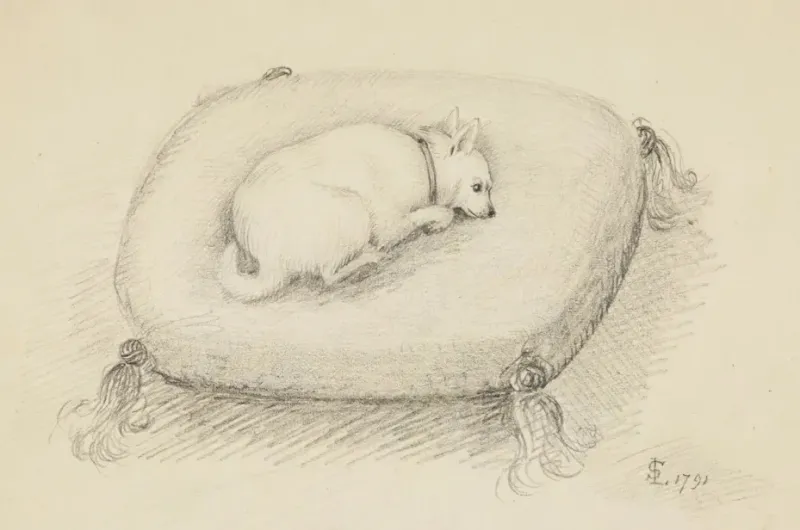
Photo: Samuel Lysons, Public domain, via Wikimedia Commons
There is a particular sound that tells you the front door of Calver's has opened on a Saturday afternoon, and it isn't the bell. It's the click-click-click of claws on the tiles, followed by a general shifting of chairs and the sudden, universal rise in pitch of about nine people saying the same word at once.
That word is usually a name. Occasionally it's "oh my word, look at him."
We are, as a bar, unapologetically dog-shaped. Not in a shouty, chalkboard-with-a-paw-print way — there's no "DOGS WELCOME" banner, no branded bandana hanging behind the bar. It's just true, the way it's true that the fire gets lit in October and that the pork scratchings are always the last thing to sell out. Dogs come in. Dogs settle. Dogs become part of the furniture in the way only the very relaxed can.
What follows is a field guide. A spotter's handbook, if you like, for the four-legged locals you'll meet before you meet most of the two-legged ones.
The Geography of the Dog Corner
Before the cast, a word on the map. Every dog pub has a dog corner, and Calver's is the stretch of worn floorboards between the fireplace and the bench under the window — the bit that catches the draught in February and the last of the sun in June. It is not officially reserved. It is, however, understood.
There's a water bowl there that nobody remembers buying. It gets refilled roughly forty times a day by people who are not staff and have no intention of being asked. Beside it sits a tin — plain, slightly dented — which contains biscuits. The tin is not mentioned on any menu. Ask about the tin and you'll be told, vaguely, that it's "just a tin."
Meet the Regulars
Bramble. Border terrier, eleven or twelve, nobody's entirely sure. Bramble has been coming in longer than most of the current bar staff have worked here and conducts herself with the weary dignity of a woman who has seen it all and would prefer not to discuss it. She sits under the third table from the door, never the second, and will accept exactly one biscuit and then look at you as though you've overstepped.
Nacho. Staffordshire cross, three years old, entirely convinced that everyone in the building has come specifically to see him. He is not wrong often enough to be corrected. Nacho does a full lap of the room on arrival — table by table, a quick hello, a hopeful glance at any crisps — before collapsing under whoever's seat is closest to the fire. He snores. People find it comforting.
Peggy. Whippet. Peggy does not walk into a pub so much as fold into it, all elbows and tremble and thin, elegant legs. She is terrified of the hand-dryer in the ladies', indifferent to other dogs, and absolutely shameless about the biscuit tin. She will pretend not to want one. She will then take one with the speed of a pickpocket.
Dennis. Pug, ancient, asthmatic, carried in more often than not these days. Dennis's owner, Ray, has been coming in on Thursday nights since before the current owners took over, and Dennis has been coming with him for the last nine of those years. Dennis sleeps. Occasionally Dennis wakes up, looks around as if to check the place is still standing, and goes back to sleep. It's a good system.
Treat Diplomacy
The biscuit tin operates on a strict and completely unwritten protocol.
One: you may offer a biscuit only if the dog has made eye contact with you first. Offering blind is considered pushy.
Two: if the owner says "oh, he's not supposed to," you wait. If the owner then says "well, go on then," you may proceed. This exchange is a formality and happens every single time.
Three: there is a separate, unofficial hierarchy of treats. Plain biscuits are the baseline. Anything involving cheese or, heaven help us, a bit of sausage from a Sunday roast is treated as a state occasion. Peggy once received a corner of a pork pie and had to go and lie down about it.
Four: never, under any circumstances, feed a dog at the bar itself. This is not snobbery. It's because Nacho will then associate the bar with food, and Nacho at the bar is a logistical problem nobody wants to solve twice.
Bringing Your Own
If you have a dog and you're wondering whether to bring them in — the answer is almost certainly yes, with caveats.
Bring them in tired, if you can manage it. A walked-out dog is a good pub dog. Bring them in on a lead the first few times, even if they're the most trustworthy creature in the county, because the pub is a small space with a lot of legs in it and everyone has a first day. Don't sit in the dog corner if your dog is nervous — take the quieter table near the door instead, and let them get used to the noise.
And do bring a lead, a bowl if you're particular about it, and a willingness to be spoken to by strangers. That last one is the real entry fee. The dog corner is, quietly, one of the most sociable bits of the entire building. You will be asked their name, their breed, their age and how they're coping with the weather, usually in that order, usually within ninety seconds. People who would never dream of striking up a conversation with a stranger at the bar will happily crouch down and ask a lurcher how its day's been.
Which is, if you think about it, the whole point.
Why the Corner Matters
A neighbourhood bar lives or dies on the small, unplanned collisions between people who might otherwise never speak. The quiz does some of that work. The meat raffle does a bit more. But the dog corner does the quietest and most effective job of all, because it gives everyone — the shy newcomer, the old regular, the person who's only popped in for a swift half and stayed three hours — something uncomplicated to talk about.
You don't need to know anything about beer to ask after Bramble. You don't need to have lived here for twenty years to be handed the tin and told to help yourself.
So if you're new, and you're nervous, and you're not sure where to sit: find the bit between the fire and the window, look for the wagging, and start there. Someone will be along in a moment to tell you all about them. Bring a biscuit, mind. It's only polite.